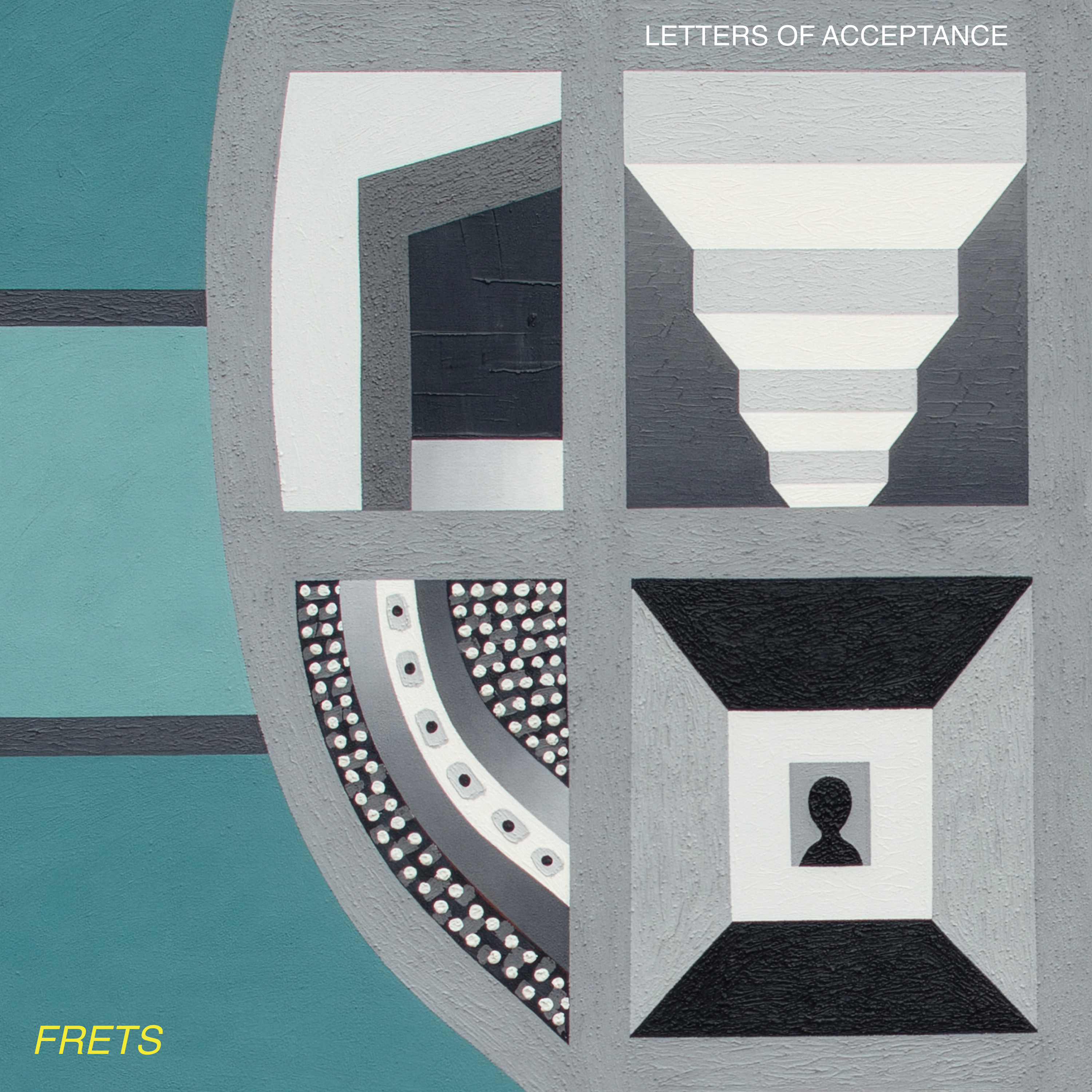

Frets – Letters of Acceptance
Release date: Nov 6th, 2026
Genre: Indie Rock / Power Pop
Label: Independent
Letters of Acceptance make songs about disappointment sound like a party. On Frets, their second album, out November 6, 2026, the Kentucky quartet places regret, dread, and failed expectations inside the bright guitar pop of The Byrds and The Monkees. Guitarists and singers Clint Newman and John Norris, bassist Scott Whiddon, and drummer Tim Welch favor loose performances and unforced harmonies over polished drama.
Much of the pleasure comes from how the four musicians play together. “Clara” opens with a ringing, R.E.M.-style guitar riff, a steady rhythm section, and vocals so relaxed they barely acknowledge the tension in the words. On “Don’t Forget to Try to Be Happy,” the shaker keeps time while bass, guitars, and vocal harmonies fit into a groove that sounds fuller than any individual part. Nothing has to fight for attention. “Sometimes Sunshine Smells Like Rain” is even better arranged: its syncopated rhythm gives the song a springy pulse, and the sudden quieter passages keep the cheerful momentum from becoming predictable. Each part stays audible while the arrangements stay busy.
Newman and Norris also have a taste for odd, funny writing. “In Sunken Style” offers “A reliquary is a very minor museum,” an oddly specific line delivered amid jaunty, Monkees-like pop and a playful “da da da” refrain. “Don’t Forget to Try to Be Happy” gets stranger with “If Elephant Jam learns to smile,” folding nonsense into an earnest attempt at optimism. Elsewhere, the jokes leave more room for unease. The cameras and security references in “Clara” turn its bouncy opening into a song about being watched, though the lyrics leave the circumstances open. “Constant Motion” pairs a nimble bassline with “constant motion instead of devotion,” a catchy phrase whose rhyme outpaces the idea behind it. The humor is strongest when it serves a story, not just a rhyme.
The gentler “Penny in the Lake” is a welcome shift. Its country-folk melody and closely doubled vocals give the song a wistful softness without losing the band’s easygoing character. But the later stretch exposes the cost of such a consistent palette. “Crime of Living” introduces bluesy guitar phrases and unexpected chord colors, yet “Too Bad Not to Be True” and “Delicate” stay just a little too closer to the record’s established sound, keeping the relaxed pace and familiar guitar textures. While a little more variation could have helped these songs stand apart, the consistency also gives the album a recognizable character from start to finish. The energetic closer “Broken Guitars” brings a change of pace, ending the record with a fuller, more crowded arrangement.
The band calls Frets both a “death” album and a “party” album, and both descriptions feel equally fitting. The songs embrace sadness without letting it dictate how the music should sound. Bright pop hooks and warm, reassuring melodies run throughout the record, often accompanying lyrics that reflect on loss and the past. While several tracks share a similar musical tone, the contrast between their upbeat arrangements and more bittersweet writing gives the album much of its charm. At its best, Frets captures the feeling of looking back on happier times, finding comfort in the memories even when they carry a little sadness.

Leave a Reply