A Kentucky rock band on grief, friendship, and making Frets.

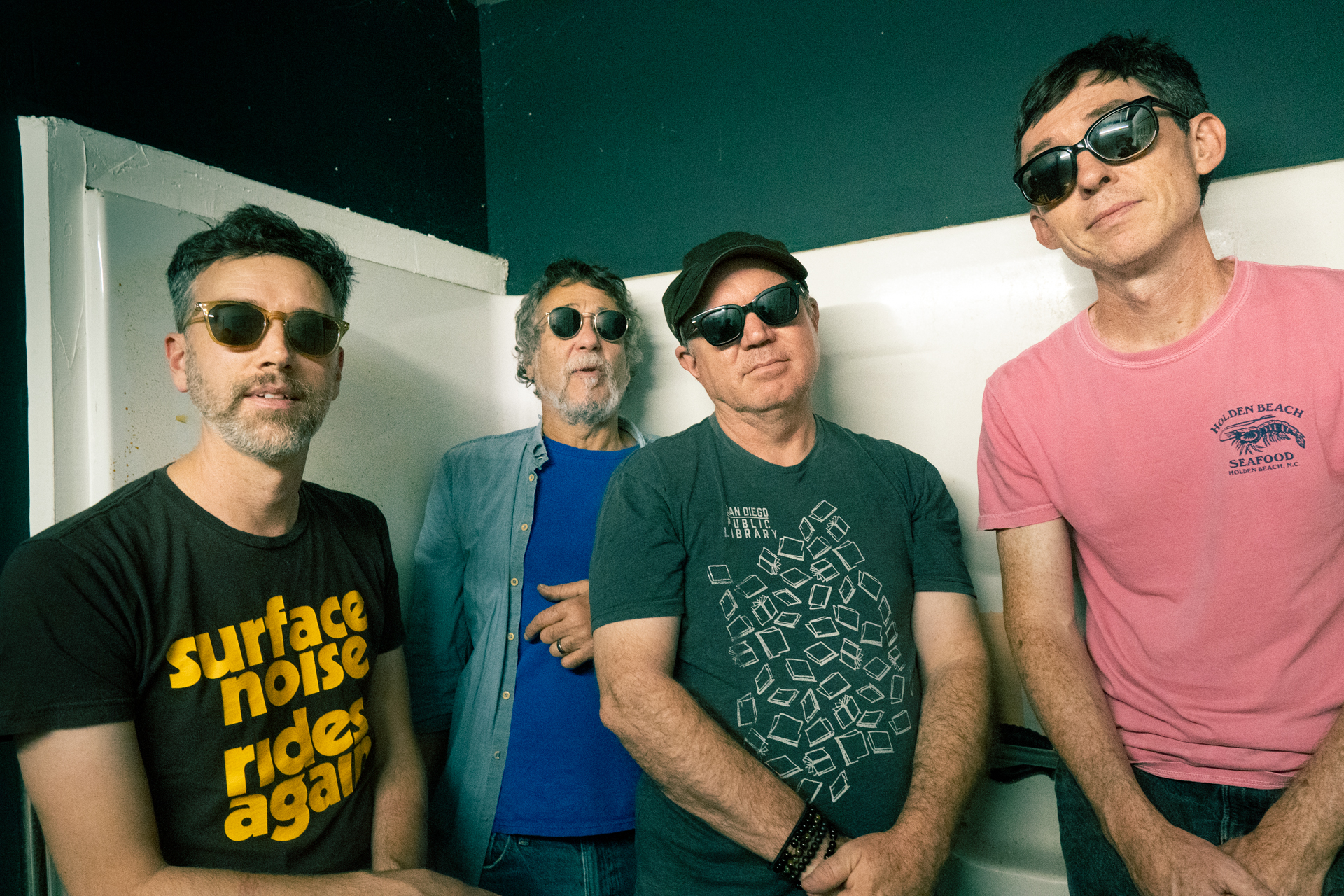
From longtime friends to bandmates, Letters of Acceptance is a Kentucky-based four-piece rock band built on a shared love of songwriting. Clint Newman and John Norris first started recording together in an attic before joining forces with Tim Welch and Scott Whiddon. If you are looking for an album that blends power pop, indie rock, and folk influences, their newest album Frets is made for you. We caught up with the band to talk about their journey and the music they’ve made along the way.
DicePressPlay: For anyone discovering Letters of Acceptance for the first time, could you introduce yourselves and tell us a little about the band? Why is the band called LOA?
Clint (LOA): We’re a songwriting project that turned into a rock band from Lexington, KY. Some say power pop, or indie rock. John Norris and I (Clint Newman) play guitars and sing, and we have Tim Welch on drums and Scott Whiddon on bass. I like the band name because it casts a positive aura on the songs even when they’re filled with dread and doubt (they’re often filled with dread and doubt). Plus it has some double letters for visual interest on the page, and it has a good acronym. I like how it provides a context for the music – each song could be a letter of acceptance, each album a collection of letters.
DicePressPlay: Could you take us back to those early days? How did the original two men band eventually turn into Letters of Acceptance?
Clint (LOA): John and I have been friends for over 25 years and always wanted to be in a band together. We both grew up in small-towns in central Kentucky and went to the same college, though separated in age by a few years. 10 years ago we were finally living close enough geographically to start writing and recording together. John would drive to my house in Louisville, we’d work on songs together and then head up to my attic and start recording. I’d play drums, John would play some acoustic guitar and we’d get the blueprint of the song down, then start adding whatever we wanted.
DicePressPlay: Tim and Scott joined later, turning the project into a four-piece band. How did the dynamic change once everyone started making music together?
Clint (LOA): The other guys joining didn’t change the dynamic much. Tim and Scott are songwriters and singers too. Like us, they’ve played in lots of bands over the years and fit like a glove. We couldn’t have found two more perfect people to work with if we tried.
DicePressPlay: You’re based in Lexington and Louisville, Kentucky, and your music draws from quite a few different genres. What were some of the biggest musical influences that shaped the band’s sound? And how much does Kentucky itself influence the music you make?
Clint (LOA): John, Tim and I all have family roots in Eastern KY and growing up we were around plenty of bluegrass and old time music. Vocal harmony and a propulsive beat are central to that music and hopefully that shows in what we do. Otherwise, that traditional music is so baked-in for us that we tend not to emphasize it in hopes that it comes out of us in novel ways. We all love lots of the same stuff: classic rock, punk, indie rock, psych, etc. I knew we had the right drummer when Tim told me his favorite drummer was Mick Avory from The Kinks. The Kinks were always song-first, driven by the lyric and melody. Mick Avory never gets in the way of that and at the same time gives every single song such an inviting, natural groove and swing. Eliciting an unconscious head-nod in the listener might be job number one for me. I always look up to bands that aren’t chasing a particular sound or audience but instead are digging for some fresh insight while still staying connected to rock/folk songwriting tradition. The Go-Betweens, Big Star, many 90’s Matador and Drag City bands, NRBQ.

DicePressPlay: Your first full-length album, Shadow Problems, came out in 2024, and now you’re back with your second album, Frets. Congratulations! How would you describe this new record to someone who hasn’t heard it yet?
Clint (LOA): 10 fresh rock songs that sound like that strange rock band your quiet older sibling was really into?
John (LOA): To me, this kinda feels like the first fully-formed version of the band on record. We just did our thing from song to song, and in the end it sounds like us, both musically and temperamentally.
DicePressPlay: What was the process of making Frets like compared with your previous releases? Was there anything you wanted to approach differently this time?
Clint (LOA): The process for FRETS was much the same as the previous record. I think the difference is the songs are a little simpler, the ideas more clear. The instrumentation is more streamlined and we tried to add as little to the basic tracks as possible.
John (LOA): The only difference might be that I think we all felt a real need to play and had a new appreciation for it after some difficult times preceding the record.
DicePressPlay: I’m curious about the album title. Frets obviously has a connection to guitars, but the word can also suggest anxiety or worrying about something. Was that double meaning intentional? What made you choose it?
Clint (LOA): John’s Dad, a musician, was going through some old stuff and came across a copy of a guitar magazine from the 80’s called FRETS with Chet Atkins on the cover and sent it to John. It’s a great time capsule of the world in which we learned to play music. Music magazines like that can seem so corny, but they were such an important pre-internet repository of esoteric music knowledge that respect must be paid. And yes, of course, there’s the double entendre, which does reflect the song content. Plus it’s a distinctive enough looking and sounding word that it can stand on its own as a title. When John first sent it to me we immediately joked that it should be the album title. It took about 10 minutes for us to realize it was, no joke, the perfect title.

DicePressPlay: “In Sunken Style” is one of the first songs released from the album. Where did the idea of the song come from?
John (LOA): I was driving into the parking lot of our local food Co-op, and basically the whole melody just suddenly presented itself to me. So I sat in my car and sang it into my phone with nonsense lyrics, probably looking very silly to passersby. I just forgot about it for a while, until a few months later I was up in the middle of the night reading this book called The Hour of the Star by Clarice Lispector. Its protagonist has this deep inner joy despite her difficult circumstances. It made me think of certain things happening in my own life and kind of fantasizing about living life with such a feeling of lightness. Then that forgotten melody popped back into my head, and the song started to emerge.
DicePressPlay: Another song that caught my attention was “Don’t Forget to Try to Be Happy.” I find the word try particularly interesting because happiness isn’t always something that comes naturally. What inspired this song, and what does that title mean to you personally?
Clint (LOA): You may have noticed how for a while now it feels like the whole world is coming apart at the seams, and that everyone is kinda miserable and traumatized? The title, the chorus and the basic chords came from John. I ended up writing the words and melody for the rest of the tune, trying to push against and investigate the title idea. It’s very easy to tell someone to take it easy, take care of themselves, “don’t work too hard,” etc. So much so that it can be obnoxious. But at its core, it’s a healthy idea.
John (LOA): Yes, I was at my mom’s house helping her with some stuff, and she has an old half-functional classical guitar there. I was taking a break and playing around with it and the basics of the song, along with the “Don’t Forget…” line, all came quickly. I was really excited about it, but then I just hit this wall where I couldn’t figure out where to go lyrically. So Clint came in and added a whole other perspective that complicates it in a way that I love.
DicePressPlay: Something I really enjoy about Frets is how cheerful some of the melodies sound, even when the lyrics are much darker. When you’re writing, do the melodies or lyrics usually come first? How conscious are you of that contrast?
Clint (LOA): Most songs start with a melodic idea and a phrase attached that “sings well.” That will usually suggest a broader idea for a song, a situation to investigate, a feeling to amplify or subvert. A song idea often comes from something that is troubling you, so lyrics can easily come off as “dark” and we don’t try to hide that. At the same time we all tend to like music that gives you a pleasing physical sensation, makes you nod your head or dance or sing along. I want us to connect with an audience first on a physical level and let any lyrical intent seep in afterwards. And that ends up with us favoring energetic musical ideas rather than ones that wallow in darkness. The contrast of cheery music and non-cheery lyrics are like tent poles pushing against each other to help the song stand on its own, which is always the ultimate goal.

DicePressPlay: You’ve described Frets as both a “death” album and a “party” album, which I think is a fascinating combination. What did you mean by those two descriptions? Was there a particular moment during the making of the record when you realized it had both sides?
Clint (LOA): It wasn’t until after everything was recorded, mixed and sequenced that we could step back and take stock of all the death and grief all four of us had been through over the last few years. We all have full lives and families that lay some heavy responsibilities on us. This band is where we get to let go and float on good vibes for a while. Every rehearsal, show, recording session, is a relief. So while there’s a lot of death in the lyric content, we try very hard to keep the functioning of this band firmly on the “party” side of the divide.
John (LOA): Yes, the experience of making it was a lot of fun. And that contrast with the source material felt very appropriate somehow.
DicePressPlay: Throughout the record, there’s a recurring sense of loss and disappointment, but also humor and moments of hope. Do you think writing these songs changed the way you looked at any of those experiences?
Clint (LOA): Our songs use feelings of loss or disappointment as material not to try and change our own perspective but rather to try and make something tangible and good out of it. I think we all still feel surrounded by loss and disappointment, but now we also have a fun band and a sizable catalog of fun songs to show for it.
John (LOA): Yes, these are things that all people eventually go through. So, to acknowledge it lyrically, but to also seek out some kind of positivity musically just feels natural.
DicePressPlay: The album begins with “Clara” and ends with “Broken Guitars (and Fucked Up Feelings).” How did you decide on the order of the songs? Was there a particular emotional journey you wanted listeners to experience from beginning to end?
Clint (LOA): We had a tentative sequence but once Ray Ketchem was done mixing the the songs, I asked him how he would sequence them. He quickly came back with a sequence that showed he’d thought plenty about it – possibly more than we had. He sent that sequence to me early in the day on Christmas Eve 2025. Late that night, putting off finishing wrapping presents for my kids, I started listening to it. I ended up listening to the whole sequence twice back-to-back and was very, very excited – it finally sounded like a record. It was an incredible relief. I don’t think of the record as telling a story. I think of it like a great collection of short stories. The stories aren’t connected by any character, plot or setting. But they flow together in a way that nevertheless creates a full-bodied world in which it’s satisfying to live for a while.
DicePressPlay: Some quick questions. Is there a lyric on Frets that still makes you laugh or smile whenever you sing it?
Clint (LOA): It literally has the word “smile” in the lyric — In Sunken Style: “Every time they split the deck, split the deck, split the deck it makes her smile.” I sing a harmony with John on “split the deck, split the deck, split the deck” and it’s so satisfying every single time, enjoying those repeated consonants and vowels all hooked up with each other.
DicePressPlay: Which guitar part on the album are you most proud of?
John (LOA): The hooky riff on “Clara” that opens the album is always tricky for me, and the version you hear on the album is just the basic guitar track that was played live with the band. I actually managed to get through it each time and didn’t have to overdub it at all. I’ll take that as a guitar win.
DicePressPlay: Which song from Frets is the most (or the least haha) fun to play on drums?
Tim (LOA): Don’t forget to try to be happy is probably the most fun. It features the drums at the top and chugs along nicely. Penny in the lake is a little challenging and requires concentration to not fuck it up.
DicePressPlay: Is there a song on the album that you just can’t get out of your head, even after playing it so many times?
Scott (LOA): Normally, I gravitate toward loud rock songs as a listener. But on this set of songs, it’s the ballads that get me every time: Too Bad, Penny. Penny kinda started as a very early, off-the-cuff-sorta sketch, while we were in the studio with Otto Helmuth, and Clint just made it shine more and more. And Too Bad? I’m still thrilled when I hear some of those lines. Those songs are heartbreakers.
DicePressPlay: Now that Frets is released, is there a song that has taken on a different meaning for you since you first wrote or recorded it?
Clint (LOA): “Penny In The Lake” hung around for a year as a sketch of a folk song that I was thinking might end up being an instrumental track. At the last minute I cracked the code on some lyrics and now it’s a favorite of mine to sing.
John (LOA): “Crime of Living” has this kind of mercurial quality. There’s actually a line in it that says, “solid as mercury.” So it’s kind of in a constant state of flux for me in terms of what it’s getting at, which is fun.
DicePressPlay: Finally, what’s next for Letters of Acceptance? Are there any upcoming shows or plans you’re particularly excited about? And is there anything you’d like to say to someone discovering your music for the first time?
Clint (LOA): One immediate plan is to learn a bunch of new covers just to cleanse the palette. Beyond that we’re excited about writing new songs and playing more shows. We’re lucky to have found each other and we’re gonna hold on for dear life.
FOLLOW LOA

Leave a Reply